Meet Gage the naviGATOR
Where you will see and hear things differently.
Read Gage’s story below — or listen here.
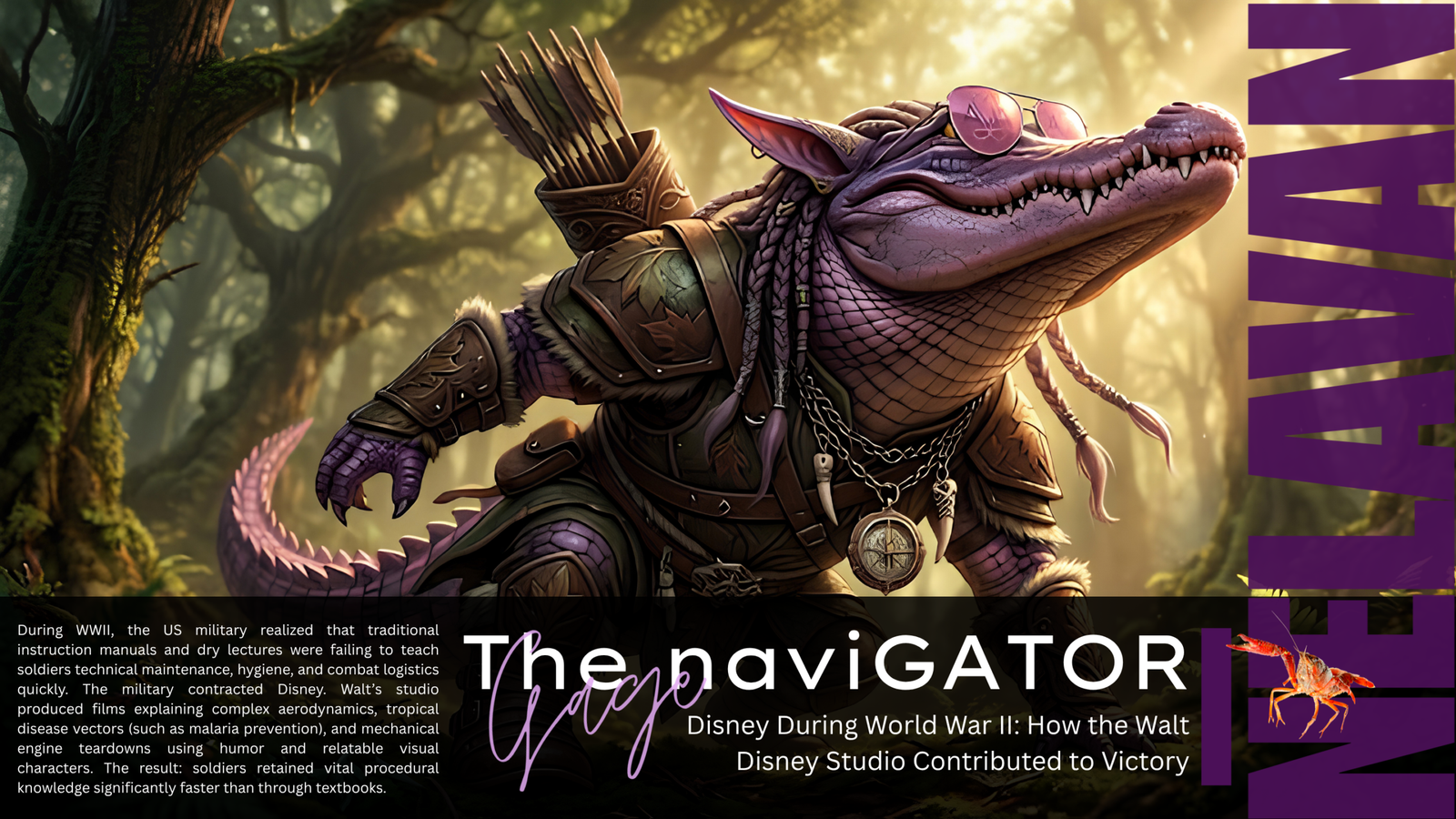
Gage is NELAVAN’s mascot: a Louisiana alligator in a leather jacket and pink sunglasses who fronts our education. He hosts our evidence summaries, social media posts, presentations, meeting materials, and conference presence. When a new guideline drops or a recall hits, Gage delivers it, accurately and with references, in a way people actually stop and read. As far as we know, NELAVAN is the first AVA network to have a mascot.
Why an alligator?
Because the biology reads like a job description for a vascular access clinician.
- He fights infection. Researchers at McNeese State University and Louisiana State University have shown that alligator blood is powerfully antimicrobial. In laboratory studies, proteins from alligator white blood cells killed MRSA and most strains of Candida tested, and alligator serum attacks bacteria, fungi, and viruses it has never encountered. Alligators take deep wounds in bacteria-filled swamp water and almost never develop serious infections.1 For a specialty that fights bloodstream infection for a living, that is quite a mascot.
- He is patient and precise. A patient hunter, he waits motionless until the moment is right, then strikes once.
- He is a true navigator. Researchers have documented a magnetic homing sense that guides displaced alligators home.2
- He sees in the dark. A reflective layer behind the retina gives him night vision,3 the same trick ultrasound performs for us when we watch a needle find a vessel no eye can see.
Why a mascot?
In World War II, training manuals and dry lectures were not teaching millions of young recruits fast enough, so the U.S. military turned to Walt Disney. Most of the studio’s wartime work became training and instructional film, using familiar characters to carry technical content, down to the Seven Dwarfs teaching malaria prevention in The Winged Scourge (1943).4–6 The characters were the delivery system, and the lessons stuck.
Gage does the same work for vascular access. He earns attention in a crowded feed. Clinicians know a Gage post on sight and know it will be evidence-based. And he makes intimidating topics approachable: a Class I recall becomes a gator holding a quarantine sign and a thirty-second read, instead of a forwarded PDF nobody opens.
The evidence deserves an audience. Sometimes, it just needs a face.
References
- Alligator aid to combat superbugs. Royal Society of Chemistry, Education.
- The orientation and navigation of juvenile alligators: evidence of magnetic sensitivity. US Geological Survey.
- Light focused on dark swamp revealed ‘eyes as far as we could see,’ research team says. Phys.org. 2025.
- Walt Disney Goes to War. US Army.
- How Disney Propaganda Shaped Life on the Home Front During WWII. Smithsonian Magazine.
- The Winged Scourge. D23: The Official Disney Fan Club.